

In recent years, the global healthcare industry has witnessed a growing demand for high-quality medical mobility solutions. Driven by innovation and precision, advanced manufacturing technologies such as laser pipe cutting machines, CNC pipe bending machines, and laser welding robots are transforming the way medical wheelchairs are designed and produced. These intelligent solutions not only enhance production efficiency but also ensure superior structural strength, consistent quality, and refined aesthetics—key factors in medical equipment manufacturing.

The Structural Foundation of Medical Wheelchairs: Precision pipe Processing
Medical wheelchairs are primarily constructed from metal pipe frameworks, typically made of aluminum alloys or high-strength steel. Modern manufacturing emphasizes precision from the very first step. This is where laser pipe cutting machines and pipe bending machines become indispensable tools.
Laser pipe Cutting Machines: Redefining Accuracy and Flexibility
Laser pipe cutting machine has become a cornerstone in the fabrication of wheelchair frames. Compared with traditional sawing or mechanical cutting methods, laser pipe cutting machines offer unparalleled accuracy and versatility.
High-Precision Cutting for Complex pipe Structures
Wheelchair frames often involve round pipes, square pipes, rectangular pipes, and even special-shaped profiles. Laser pipe cutting machines can process all these materials with exceptional precision, achieving clean edges, smooth contours, and consistent dimensions.
Enhanced Design Freedom and Customization
Customization is increasingly important in medical equipment manufacturing. Different users require different seat heights, backrest angles, folding mechanisms, and support structures. Laser pipe cutting machines enable manufacturers to respond quickly to customized design requirements without changing molds or tools.
Improved Efficiency and Material Utilization
Laser cutting is a non-contact process, which minimizes material deformation and waste. High cutting speeds and automated loading systems of the laser pipe cutting machine significantly shorten production cycles, enabling manufacturers to meet growing market demands while maintaining consistent quality.
Pipe Bending Machines: Shaping Comfort and Ergonomics
While cutting defines the length and connection points of pipes, pipe bending machines give medical wheelchairs their ergonomic form and functional design.
Accurate Bending for Ergonomic Design
Advanced CNC pipe bending machines can perform multi-radius and multi-angle bends with high repeatability, ensuring every wheelchair meets ergonomic design standards.
Supporting Lightweight and High-Strength Structures
Lightweight design is a critical requirement in modern medical wheelchairs, especially for home care and portable models. pipe bending machines enable the use of thinner yet stronger metal pipes by maintaining structural integrity during bending.
When combined with optimized material selection and precise cutting, pipe bending machine helps manufacturers achieve the ideal balance between strength and weight, enhancing user convenience without compromising safety.
Automation and Consistency in Mass Production
Automated pipe bending machines significantly reduce dependence on manual labor, ensuring consistent quality across large production volumes. Once programmed, the pipe bending machines can produce identical components repeatedly, minimizing human error and ensuring compliance with medical device standards.
Laser Welding Robots: Strengthening Connections with Intelligence
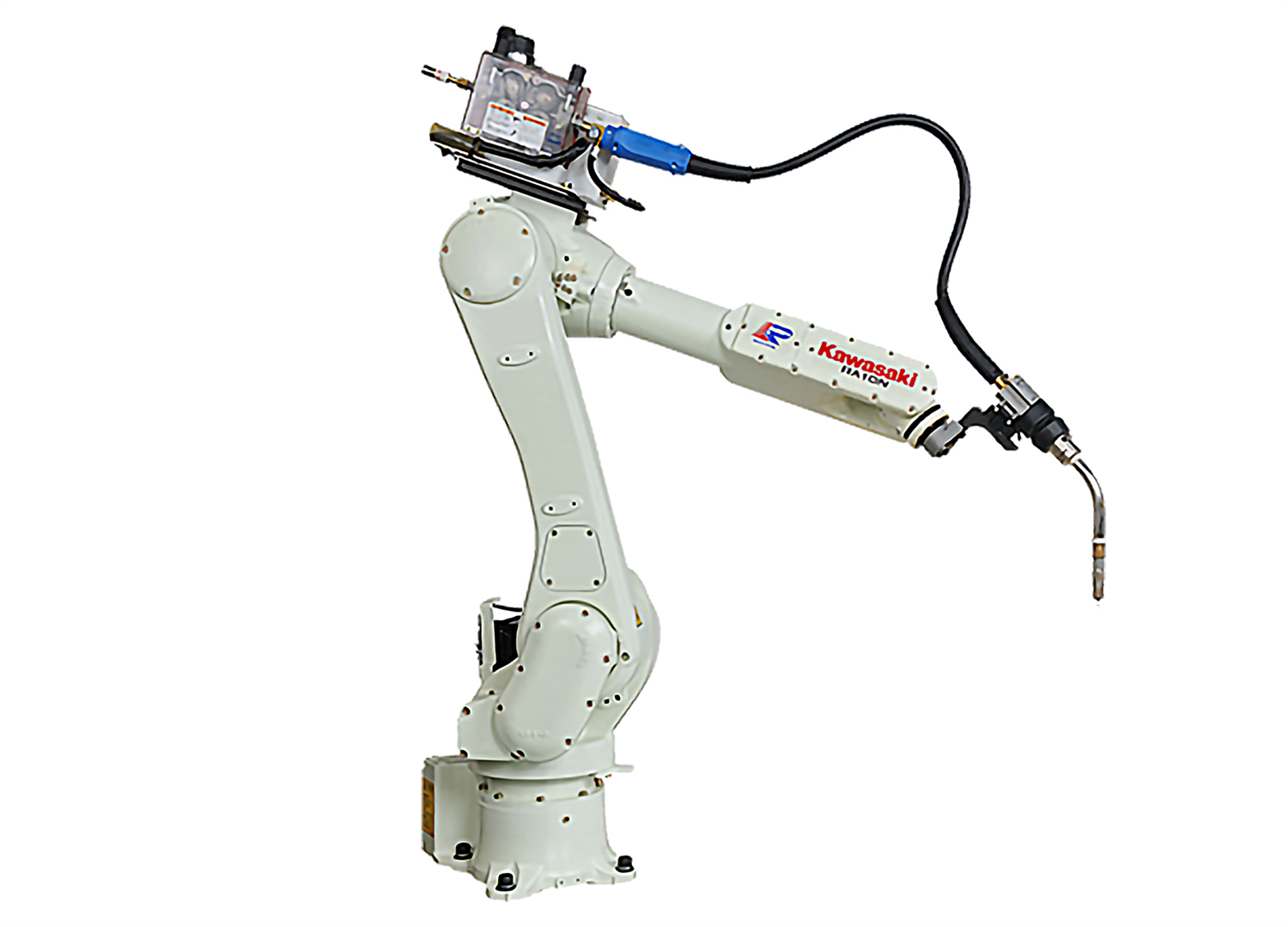
After cutting and bending, the next critical step in wheelchair manufacturing is assembly and joining. The quality of welded joints directly affects the strength, durability, and safety of the final product. This is where laser welding robots demonstrate their outstanding advantages.
Superior Weld Quality and Structural Strength
Laser welding robots use concentrated laser energy to create deep, narrow welds with minimal heat input. For medical wheelchairs, which must endure repeated use and varying load conditions, reliable weld quality is essential. Laser welding robot ensures consistent penetration and fusion, significantly enhancing structural stability.
Clean and Hygienic Manufacturing Process
Medical equipment manufacturing places high demands on cleanliness and surface quality. Laser welding robot produces little spatter and requires minimal post-weld cleaning, making it ideal for medical applications.
Intelligent Automation and Production Efficiency
Integrated with robotic arms and vision systems, laser welding robots can automatically locate welding positions and execute complex welding paths with precision. This automation reduces labor costs, increases production speed, and ensures uniform quality across all products.
Furthermore, laser welding robot systems can easily adapt to different wheelchair models and frame designs through simple program adjustments, supporting flexible and scalable manufacturing.
Seamless Integration: A Complete Intelligent Manufacturing Workflow
The true value of these advanced machines lies in their seamless integration into a unified production line. By combining laser pipe cutting, pipe bending, and laser welding robots, manufacturers can establish a highly automated and intelligent workflow.Laser pipe cutting machines, pipe bending machines, and laser welding robots empower manufacturers to push the boundaries of design, efficiency, and quality. Together, they enable the production of medical wheelchairs that are lighter, stronger, safer, and more comfortable, ultimately improving the quality of life for users around the world.