

Introduction
In contemporary interior design, the metal sideboard rack has become an increasingly popular piece of furniture, especially in dining rooms, kitchens, and multifunctional living spaces.Unlike traditional wooden furniture, metal furniture manufacturing demands high precision, structural accuracy, and consistency. To achieve these goals, modern factories rely heavily on advanced automated equipment, particularly laser pipe cutting machines, pipe bending machines, and laser welding robots.
Among these steps, the laser pipe cutting machine, pipe bending machine, and laser welding robot form the technological backbone of the manufacturing process. Each machine performs a specialized task while working together as part of an integrated production system.
This article provides a comprehensive overview of the production process of a metal sideboard rack, with a detailed explanation of how laser pipe cutting machines, pipe bending machines, and laser welding robots function and contribute at different stages of production. By understanding their roles, we gain insight into how modern manufacturing technology supports high-quality metal furniture production.
The Role of the Laser pipe Cutting Machine in Structural Preparation
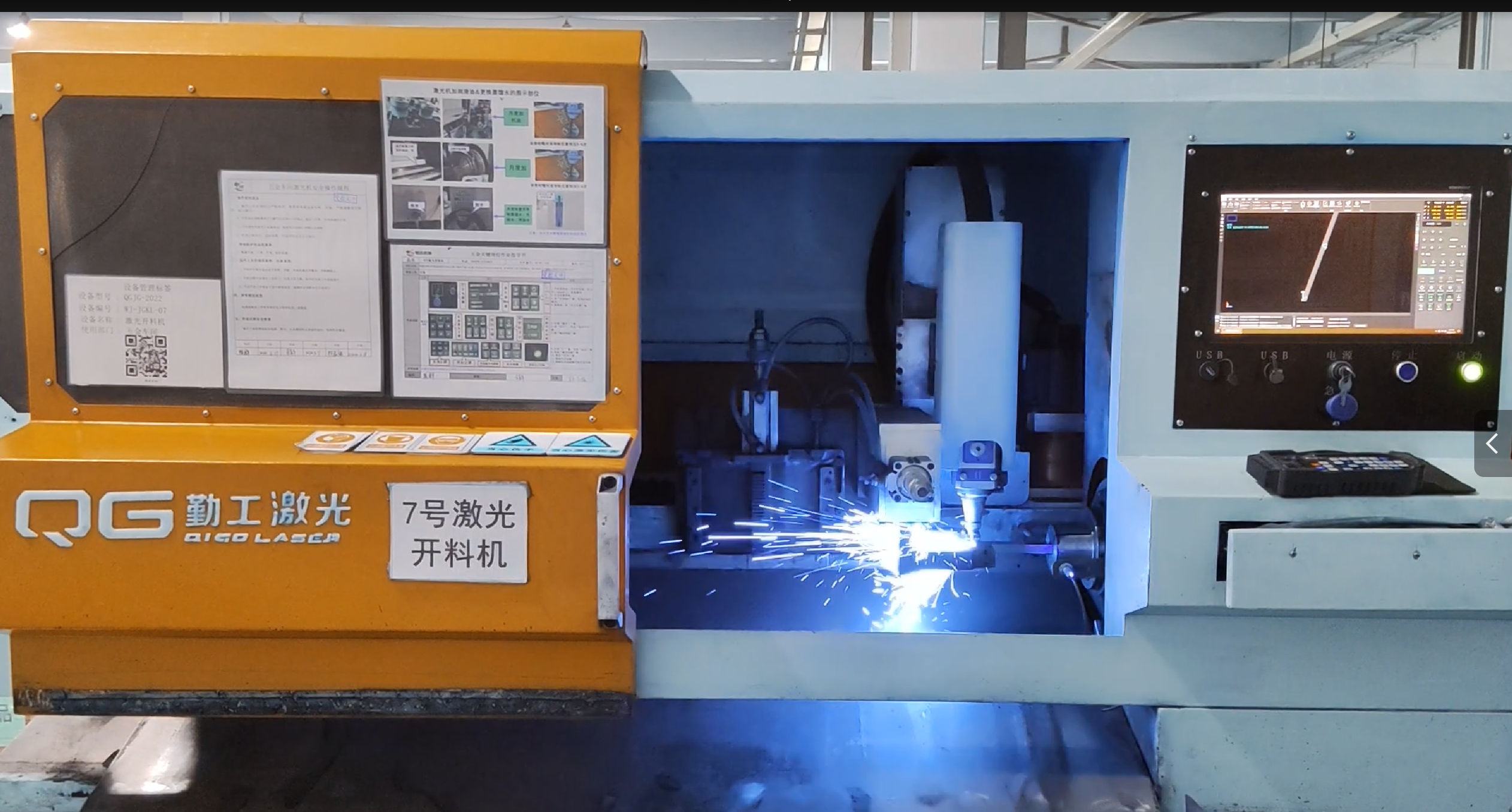
The laser pipe cutting machine is the first critical piece of equipment used in manufacturing the metal sideboard rack. Its main function is to cut raw metal pipes into precise lengths and shapes according to the product design.
Precision Cutting for Accurate Assembly
Laser pipe cutting machines use high-energy laser beams controlled by CNC systems to achieve extremely accurate cuts.
In addition to straight cuts, the laser pipe cutting machine can produce complex features such as slots, holes, angles, and notches directly on the pipe surface. These features are often used for bolt connections, shelf supports, or decorative elements. Integrating these details at the cutting stage eliminates the need for additional drilling or milling processes.
Efficiency and Automation
Modern laser pipe cutting machines are highly automated. With automatic loading and unloading systems, they can process large quantities of pipes continuously. Once the cutting program is uploaded, the laser pipe cutting machine can operate with minimal human intervention, significantly increasing productivity.
Automated laser pipe cutting machine also reduces dependence on skilled manual labor, lowering labor costs while improving production stability.
The Function of the pipe Bending Machine in Frame Forming
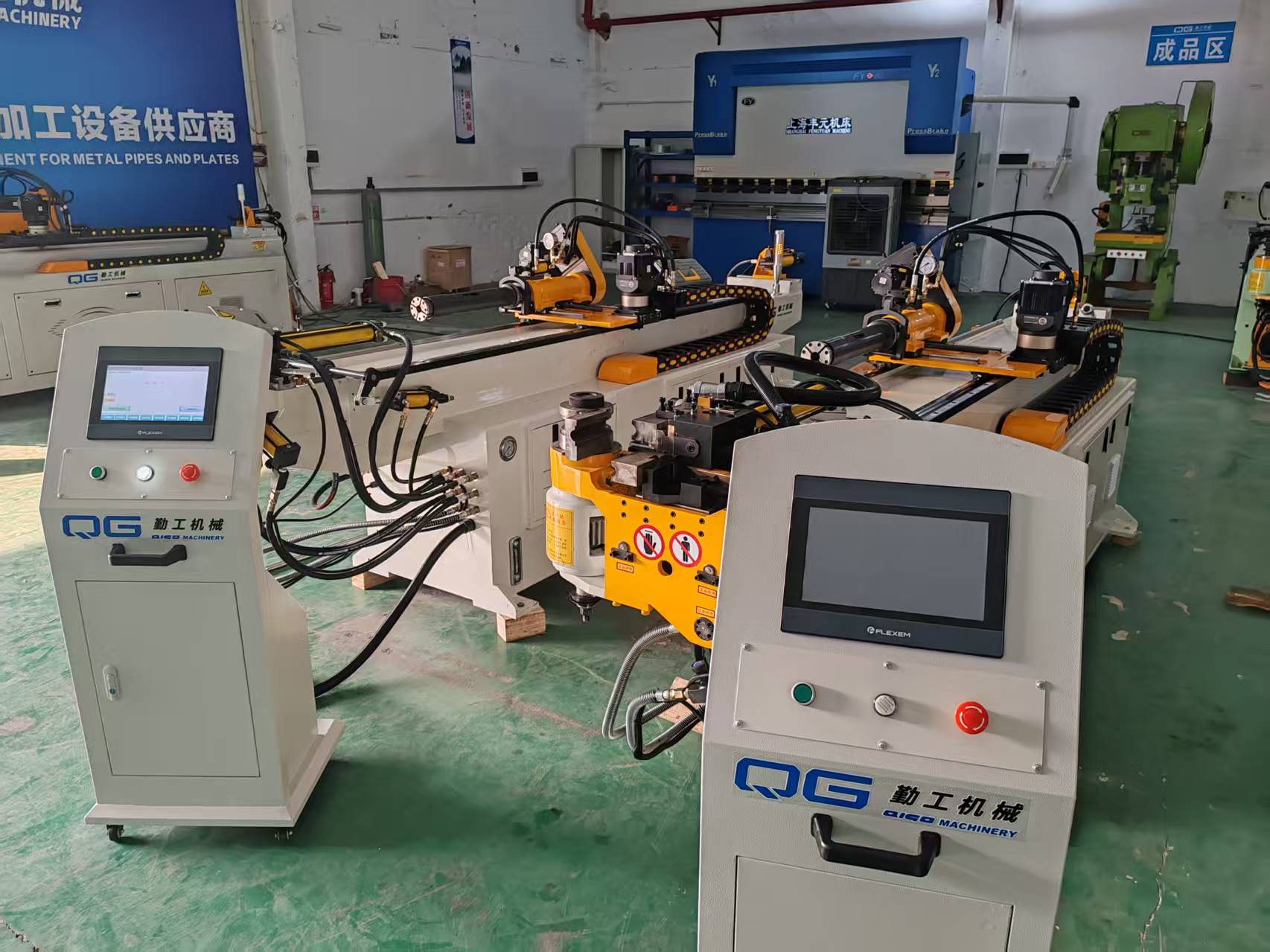
After the metal pipes are cut to size, they are transferred to the pipe bending machine for shaping.
Accurate and Repeatable Bending
Pipe bending machines apply controlled mechanical force to bend metal pipes at precise angles and radii. Modern CNC pipe bending machines can perform complex multi-angle bends with high accuracy and repeatability. This precision ensures that every frame component matches the design specifications exactly.
Supporting Design Flexibility
Furniture designers often experiment with different shapes, from sharp industrial angles to smooth, flowing curves.Pipe bending machines provide the flexibility needed to support diverse design styles. By simply modifying digital bending programs, manufacturers can switch between different models without changing physical tooling.
Pipe bending machines allow manufacturers to respond quickly to new design trends and customer preferences.
Reducing Manual Errors and Improving Safety
Before automated bending equipment became widespread, pipe bending machine was often done manually or with semi-automatic machines, requiring significant operator skill. This approach increased the risk of inconsistencies and workplace injuries. CNC pipe bending machines greatly reduce these risks by standardizing the bending process and minimizing manual handling of heavy metal pipes.
The Role of Laser Welding Robots in Frame Assembly
Once the pipes are cut and bent, they must be assembled into a complete metal sideboard rack frame. Laser welding robots play a decisive role at this stage.
High-Quality and Strong Weld Joints
Laser welding robots use a concentrated laser beam to fuse metal components together with exceptional precision. Compared to traditional arc welding, laser welding robot produces narrower weld seams, deeper penetration, and minimal heat-affected zones. This results in strong, durable joints that can withstand long-term use and heavy loads.
Automation, Speed, and Consistency
Laser welding robot systems are fully programmable, allowing precise control over welding paths, speed, and power. Once optimized, these parameters can be repeated consistently across large production runs. This consistency is essential for maintaining uniform quality in mass production.
In addition, laser welding robots operate much faster than manual welding, significantly increasing production efficiency. Reduced cycle times allow manufacturers to meet large orders without compromising quality.
Improved Safety and Reduced Distortion
From a safety perspective, laser welding yobot reduces workers’ exposure to welding fumes, intense light, and high temperatures. Operators can monitor the process remotely, creating a safer and more controlled working environment.
Integration of Equipment and Quality Assurance
The true strength of modern metal sideboard rack manufacturing lies in the seamless integration of laser pipe cutting machines, pipe bending machines, and laser welding robots. Digital design data flows directly from CAD systems into each machine, ensuring consistency from the initial cut to the final weld.
Conclusion
The production of a metal sideboard rack is a complex and highly technical process that depends on advanced manufacturing equipment. Laser pipe cutting machines ensure precise and efficient material preparation, pipe bending machines shape components with accuracy and flexibility, and laser welding robots provide strong, clean, and consistent assembly.
Together, these technologies enable manufacturers to produce high-quality metal sideboard racks that meet modern standards of durability, aesthetics, and efficiency.